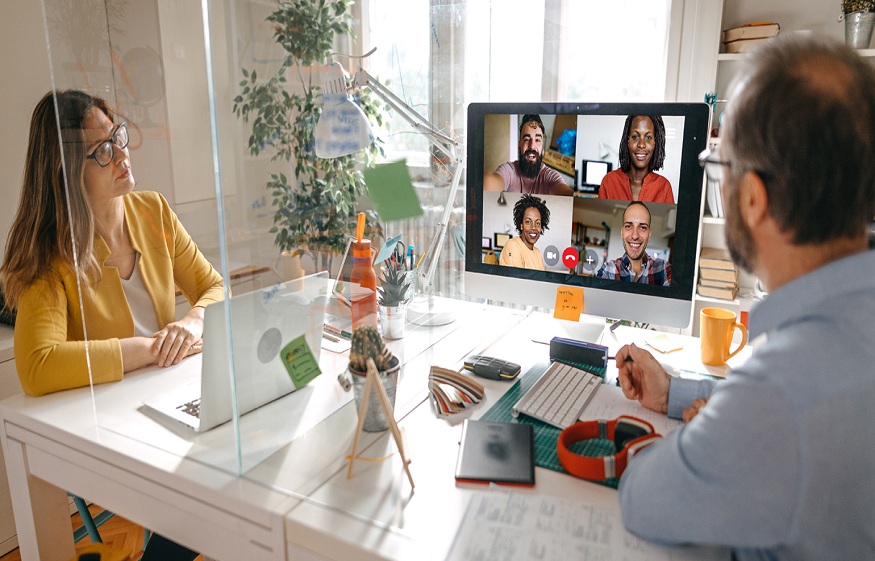
The way films and television content are created has evolved dramatically over the past decade. Productions are no longer confined to a single studio or city. Today, filming often takes place across multiple countries to take advantage of tax benefits, unique locations, and specialized talent, while editing, visual effects, sound design, and color grading are handled by teams spread across continents. Directors, producers, editors, and executives frequently collaborate from different time zones, making remote teamwork an everyday reality. Therefore, an increasing number of film and television studios use remote production collaboration tools today.
Why are remote production collaboration tools used by modern studios
While traditional video meeting and screen-sharing applications are excellent for everyday business communication, they fall short when used for professional media production. Creative teams require far more than a simple video call. Compressed video streams often distort colors, making it difficult for directors, cinematographers, colorists, and VFX supervisors to accurately evaluate scenes. Audio and video can easily fall out of sync during screen sharing, reducing the effectiveness of review sessions. Feedback frequently becomes scattered across emails, messaging apps, and meeting notes, making it difficult to trace comments back to the exact frame or sequence they reference. Perhaps the biggest drawback is that valuable discussions disappear once a meeting end. Without a persistent record of creative decisions, teams that couldn’t attend may struggle to understand why certain choices were made. Specialized remote production collaboration tools overcome these limitations by creating a centralized workspace where media can be viewed at professional broadcast quality while preserving every annotation, discussion, and approval throughout the production process.
Read More: Tech Recruiter Tips: How to Hire Top Candidates
Post-production phase often involves a large number of collaborators. Editors, directors, producers, visual effects artists, and sound designers must review multiple versions of the same content while making continuous creative refinements. Dedicated collaboration platforms allow these teams to review edits together as though they were sharing the same editing suite. Every comment, annotation, or approval remains connected to the exact version, frame, or sequence it references, reducing confusion and eliminating the need to search through lengthy email conversations. Version comparison features further improve efficiency by allowing teams to evaluate multiple edits, visual effects revisions, trailers, or marketing assets side by side. Instead of manually tracking changes, reviewers can quickly identify differences and make faster creative decisions. When projects reach completion, final reviews and approvals can be presented in a polished, branded environment rather than through scattered download links or file-sharing services, creating a more professional experience for clients and stakeholders alike.
Read More: Charles Spinelli Explores the Importance of Legal Compliance in Employment Management
One of the most significant advancements in remote production collaboration is the ability to connect directly with professional editing software. Rather than exporting rough cuts or relying on compressed screen sharing, editors can stream their active editing timeline, program monitor, or entire editing interface directly into a collaborative review session. Directors and producers see precisely what the editor is working on in real time, frame by frame, while changes are being made. This immediate visibility speeds up decision-making, reduces unnecessary exports, and enables creative discussions to happen while edits are actively evolving instead of after they have already been rendered.