Sharing data between teams, companies, and business partners is a common requirement in modern data environments. Traditionally, organizations often create copies of datasets, export files, or move information into another system before giving someone access. While these approaches can work, they can also create extra storage, maintenance, and security challenges.
Snowflake takes a different approach by allowing organizations to share selected data with other Snowflake users without relying on traditional data-copying methods.
For professionals learning modern cloud data platforms, Snowflake Training in Chennai can help build practical knowledge of data warehousing, SQL, data sharing, security, and real-world Snowflake workflows.
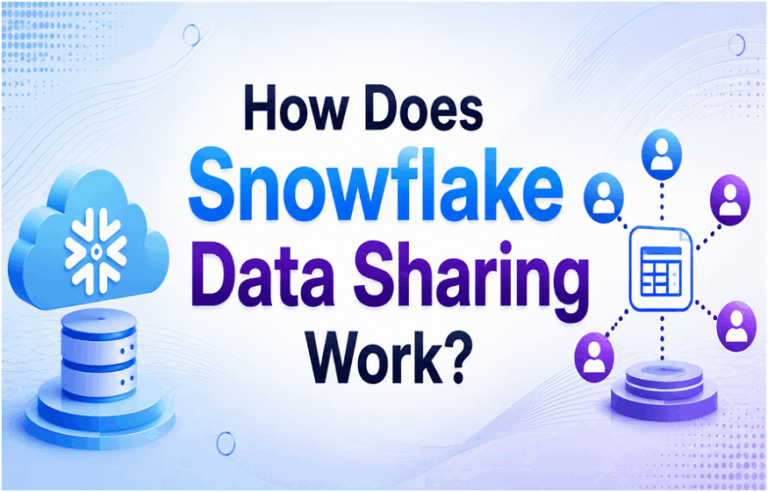
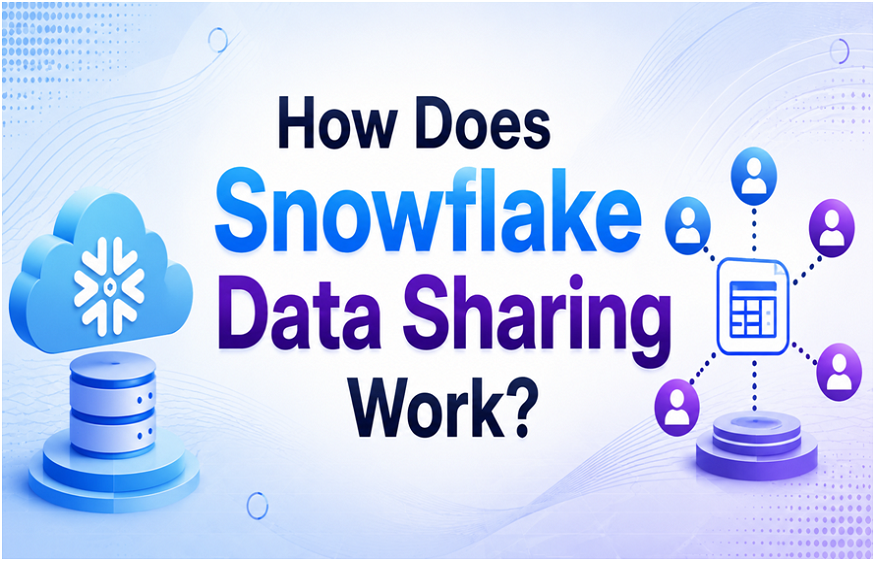
What Is Snowflake Data Sharing?
Snowflake Data Sharing allows a data provider to give another Snowflake account controlled access to selected data. The organization providing the information is called the provider, while the organization receiving access is called the consumer.
A simple example would be a company that stores sales information in Snowflake and wants to provide selected sales data to an external analytics team. Instead of exporting the entire dataset and sending a file, the company can create a controlled share containing the required information.
The consumer can then access the shared data based on the permissions provided.
How Does Snowflake Data Sharing Work?
The basic process can be understood in a few steps:
Provider Data → Share Created → Access Granted → Consumer Accesses Shared Data
The provider decides which data should be made available.
It can share specific databases, schemas, tables, or other supported objects depending on the sharing setup.
The consumer then receives access to the shared data and can query it according to the permissions granted.
The underlying idea is simple: give access to the required data instead of creating unnecessary copies.
Who Is the Data Provider?
The provider is the organization or Snowflake account that owns or controls the data being shared.
For example, imagine a retail company has customer and sales information stored in Snowflake.
The company may want to share only selected sales information with a business partner.
The retail company acts as the provider.
It determines:
- What information can be shared
- Who can access it
- Which objects are included
- What permissions are provided
This gives the provider control over the information being made available.
Who Is the Data Consumer?
The consumer is the organization or Snowflake account that receives access to the shared data.
For example, an external analytics company may receive access to selected sales information.
The consumer can query the shared data according to the access granted by the provider.
Importantly, receiving access to shared data doesn’t automatically mean the consumer gets access to everything in the provider’s environment.
The provider controls the scope of the share.
Why Is Data Sharing Useful?
Traditional data transfer can involve several steps.
A company may need to:
- Extract data.
- Create a file.
- Transfer the file.
- Load it into another environment.
- Maintain the copied dataset.
- Repeat the process when the source changes.
This can become difficult when data needs to be shared frequently.
Snowflake’s sharing capabilities can simplify this process by allowing consumers to access shared information without requiring the provider to create and distribute traditional copies for every consumer.
Sharing Selected Data
One of the useful aspects of Snowflake data sharing is that organizations don’t necessarily have to expose their entire database.
Suppose a company has:
- Customer information
- Product information
- Employee records
- Sales transactions
- Financial information
An external partner may only need sales data.
The provider can create a share containing the required information rather than making unrelated datasets available.
This helps organizations follow the principle of giving users access only to the information they actually need.
How Does Security Work?
Security is an important consideration whenever data is shared externally. Snowflake provides access controls that allow organizations to manage who can access shared data and what information is included.
The provider remains responsible for determining what is exposed through the sharing arrangement.
For example, an organization could share an analytical sales view rather than making sensitive operational tables directly available.
This can provide an additional layer of control over the information being shared. Organizations should still follow their own security, governance, privacy, and compliance requirements when deciding what data can be shared.
Does Snowflake Data Sharing Create a Copy?
One of the key ideas behind Snowflake’s sharing model is that consumers can access shared data without requiring the provider to create a traditional physical copy for every consumer. This can reduce the need to maintain multiple independent versions of the same dataset. Consider a company that updates its sales information regularly.
If several partners each maintain separate copies, the company may need to repeatedly distribute updates. With controlled data sharing, consumers can access the shared information through the Snowflake environment according to the sharing arrangement.
Secure Data Sharing Between Organizations
Data sharing becomes especially useful when multiple organizations need to collaborate.
For example, imagine a financial organization wants to provide monthly performance information to an external consulting company.
The consultant needs the data for analysis, but it doesn’t need access to unrelated customer or internal operational information. The provider can share the relevant dataset while keeping other information outside the consumer’s access scope. This makes controlled sharing useful for business partnerships, analytics, reporting, and collaboration.
Internal Data Sharing
Data sharing isn’t limited to external companies.
Organizations can also use sharing capabilities to support collaboration between internal teams.
For example, a large company may have separate departments for:
- Finance
- Sales
- Marketing
- Operations
- Data Science
Instead of creating multiple copies of commonly used datasets, teams can access shared information according to their requirements and permissions.
This can make centralized data management easier.
Snowflake Marketplace and Data Sharing
Snowflake’s broader data-sharing ecosystem also includes the Snowflake Marketplace. Organizations can discover and access datasets provided by other organizations through supported marketplace offerings.
For example, an analytics team might need industry or geographic data to enrich its internal datasets.
Rather than building every dataset from scratch, the team may be able to obtain relevant data through Snowflake’s data ecosystem. This can support faster experimentation and analytics.
Read More: Tech Recruiter Tips: How to Hire Top Candidates
Data Sharing vs Traditional Data Transfer
The difference becomes clearer when you compare the two approaches.
With traditional data transfer, the process might look like:
Source → Export → File Transfer → Destination → Load
With Snowflake sharing, the workflow can be closer to:
Provider → Controlled Share → Consumer Access
The second approach can reduce some of the operational work involved in repeatedly exporting and loading datasets.
It can also help organizations maintain a more centralized approach to data management.
Example of Snowflake Data Sharing
Let’s take a simple example.
A retail company stores:
- Customer information
- Product details
- Order records
- Sales transactions
An external analytics agency needs monthly sales information.
Instead of sending a spreadsheet every month, the retail company can create a controlled share containing the required sales data. The agency can then query the shared information based on its granted access. If the business requirements change, the provider can adjust the sharing arrangement according to supported controls and organizational policies.
Benefits of Snowflake Data Sharing
Some common benefits include:
Reduced Data Duplication
Organizations can reduce the need to maintain multiple traditional copies of shared datasets.
Faster Collaboration
Consumers can access required information without waiting for repeated file transfers.
Centralized Data Management
The provider can maintain the source data in its Snowflake environment.
Controlled Access
Organizations can decide what information should be made available to consumers.
Simplified Data Exchange
Sharing can be easier to manage than repeatedly exporting and importing large datasets.
What Should Organizations Consider?
Although Snowflake makes data sharing easier, organizations should still carefully evaluate:
- Data sensitivity
- User permissions
- Compliance requirements
- Governance policies
- Data ownership
- Consumer access
- Data freshness requirements
Not every dataset should automatically be shared.
A good sharing strategy starts by identifying exactly what the consumer needs and providing only the appropriate information.
Read More: Charles Spinelli Explores the Importance of Legal Compliance in Employment Management
Final Thoughts
Snowflake Data Sharing provides a practical way for organizations to collaborate without relying entirely on traditional data exports and duplicate datasets. The provider controls what information is shared, while consumers can access the permitted data according to the defined sharing arrangement.
For data engineers, understanding data sharing is useful because modern data platforms are increasingly focused not only on storing and processing information but also on securely making data available across teams and organizations. Qmatrix Technologies helps learners build practical Snowflake skills through hands-on projects, SQL exercises, real-world data workflows, expert guidance, and structured interview preparation.
About the Author